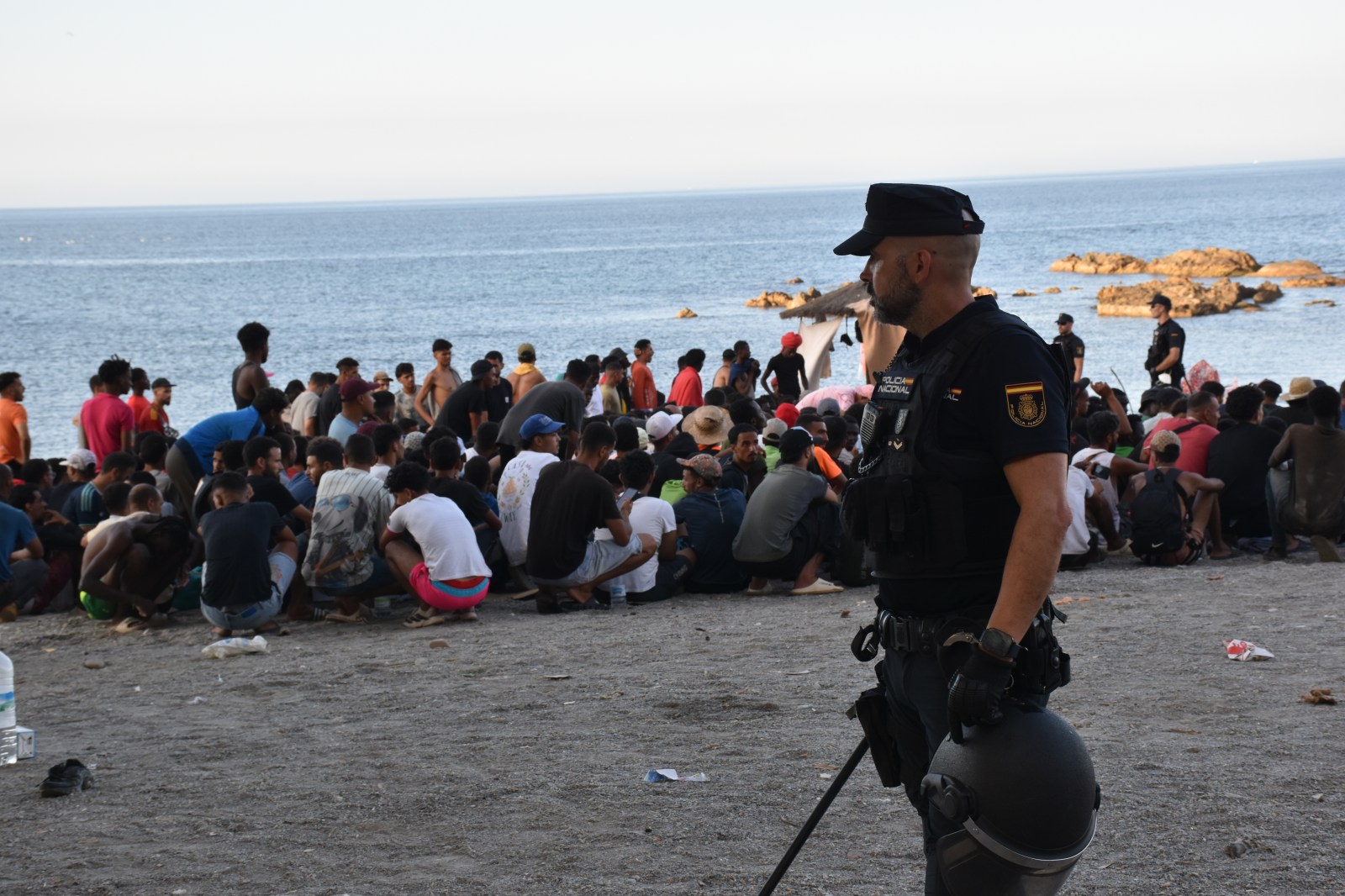
Spain’s foreign minister has vowed to send back all individuals who arrived in Ceuta in late July to their countries of origin. This response follows a sudden influx of approximately 72,000 people into the city, affecting Spain’s relations with its neighbors. Ceuta, a Spanish enclave in northern Africa, borders Morocco and has a population of just 84,000.
During the unexpected rush between July 30 and 31, Spanish authorities deployed extra police and military forces to control the situation. Tragically, at least 80 people died as they attempted to enter the city, either by swimming around the border fence or crossing by land.
“Every last person who has entered Spain irregularly will be returned to Morocco,”
said José Manuel Albares, Spain’s foreign minister, on Tuesday. He indicated that Rabat, Morocco’s capital, is ready to assist in the return of its citizens.
Albares addressed reporters from Ceuta after meeting with the territory’s conservative leader, Juan Jesús Vivas, who stated that about 11,000 individuals from the July influx still remained in the city. By early August, most migrants had returned to Morocco, leaving around 2,000 people still in Ceuta.
For those escaping conflict or persecution, asylum applications in Spain are available. Unaccompanied minors receive hearings regarding their living conditions, according to Spanish media reports.
Vivas had previously informed European politicians that the situation was akin to an “invasion” and demanded the immediate expulsion of illegal arrivals. Ceuta is one of the European Union’s two land borders with Africa, and periodic surges of migrants attempt to reach Europe from this point. The other border is Melilla, another Spanish territory.
Spanish Prime Minister Pedro Sánchez labeled the migration wave as an “attack on Spain’s territorial integrity” and pointed to human trafficking gangs as culprits. Videos circulated on social media suggested the border was open and portrayed a misleading interpretation of a Spanish Supreme Court ruling, encouraging the influx. The court had determined in late June that migrants arriving in Ceuta and Melilla could not be summarily returned without due process if they arrived by sea.
The incident triggered tensions between Spain’s left-leaning government and right-wing Italian leadership. Italy began checks on Spanish travelers on August 1, subsequent to the migration rush. In response, Spain conducted spot checks on Italian visitors, actions criticized by Italian officials as unacceptable.
While Spain generally supports migration, it accused certain European nations of responding polarizingly to the crisis, emphasizing the threat of “fake news.” Though part of the EU and Schengen Area, free movement rules do not apply to Ceuta.
Albares directly addressed potential migrants:
“Do not risk your lives, your money, and your future on an adventure doomed to failure.”
Leave a Reply