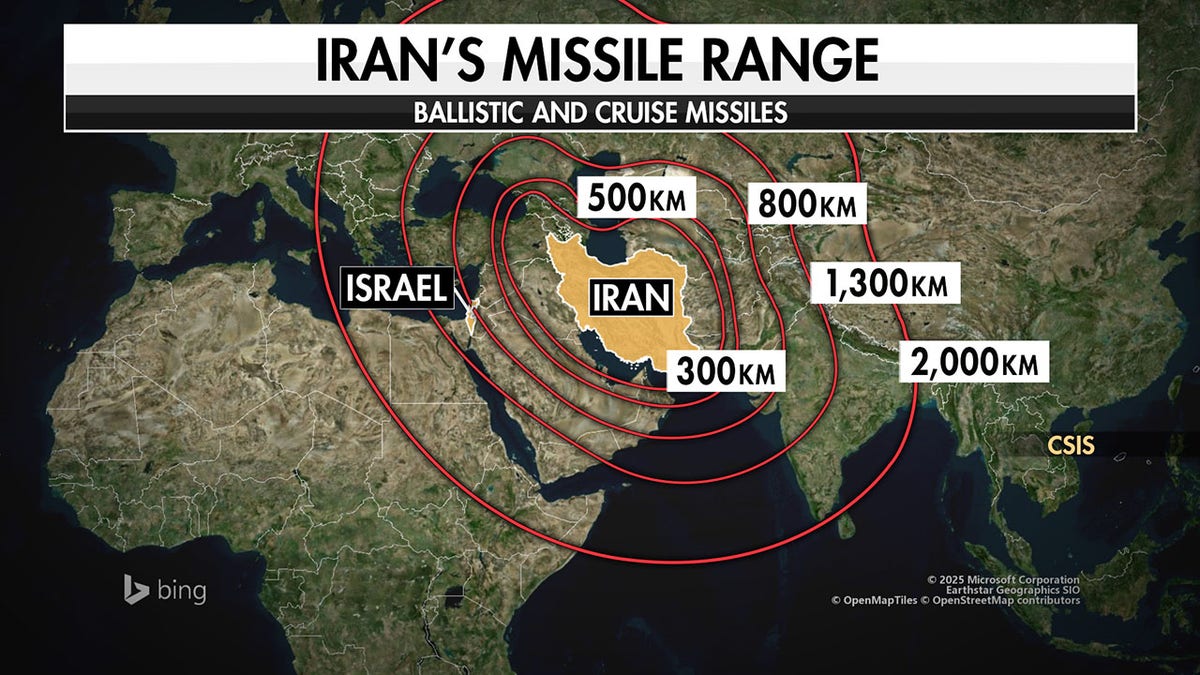
In recent discussions, President Donald Trump hinted at a changed perspective on Iran’s missile capabilities. Speaking at the G7 international forum, Trump compared Iran’s missile ownership to that of other countries, stating, “If other countries have them, it’s a little bit unfair for them not to have some.” He highlighted that if nations like Saudi Arabia and Qatar possess missiles, Iran’s missile possession could be seen in relative proportion.
Trump argued that missiles are not the core issue, claiming they impact small areas rather than causing global destruction. He indicated that Gulf nations would tackle nonnuclear matters, including ballistic missiles and terrorist proxies linked to Iran.
Previously, senior administration officials voiced concerns over Iran’s ballistic missiles, describing them as threats to regional security and tools to shield Tehran’s nuclear ambitions. Secretary of State Marco Rubio had emphasized that Iran’s missiles serve as a protective cover for potential nuclear developments.
Officials pointed to Operation Epic Fury, aimed at dismantling Iran’s missile capabilities. War Secretary Pete Hegseth stressed the operation’s focus on destroying missile facilities, while White House Press Secretary Karoline Leavitt underlined the goal to eliminate Iran’s deadly ballistic missiles.
Secretary Rubio reiterated the importance of neutralizing Iran’s missile force to prevent conventional military cover for nuclear weapon programs. Officials identified objectives such as dismantling Iran’s air force, navy, and missile-launching and production capabilities to thwart any nuclear weapon acquisition.
Trump’s G7 remarks also questioned the administration’s earlier stance on Iran’s nuclear program. His comments followed the release of a memorandum of understanding between the U.S. and Iran. This agreement included unresolved disputes about Iran’s enrichment program’s future.
Recently, negotiations focused on Iran’s nearly 900-pound stockpile of 60% enriched uranium. Discussions involved down-blending under International Atomic Energy Agency supervision, although final agreement details are still unclear.
While Iran’s willingness to dilute its stockpile was seen as a concession, the memorandum did not resolve whether Iran could keep any enrichment capability. Previously, Trump firmly opposed Iranian enrichment, with special envoy Steve Witkoff insisting on blocking even minimal capabilities.
Trump at the G7 adopted a more flexible tone about Iran’s nuclear power access, commenting, “You have to use a little common sense.” This shift softened the administration’s earlier hardline on curtailing Iran’s nuclear activities.
The White House stood by Trump’s recent remarks, stating, “We are going to let the President’s comments stand.” Efforts to reach the Pentagon for additional input were unsuccessful.
Leave a Reply