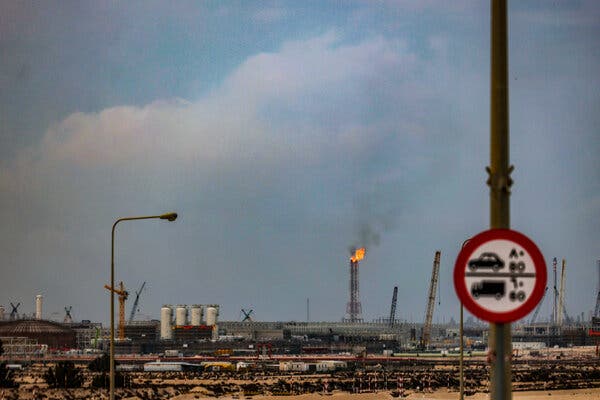
Before the recent conflict, the global market for liquefied natural gas (LNG) was predominantly influenced by two countries. This dynamic changed when one of these key players faced significant challenges.
The LNG production facility in Qatar’s Ras Laffan Industrial City suffered severe setbacks due to Iranian attacks. These events have dealt a blow to Qatar’s production capabilities, with the damage predicted to take years for complete restoration.
The concern over the global trade in LNG, a critical energy source for Asia, was not new. Years before the hostilities, Japanese executives were already apprehensive about its implications for Asia’s energy security. The market was gradually becoming dominated by the United States and Qatar. By 2030, they were expected to account for the majority of the supply increase. Japan, being a major importer of LNG, was uneasy about this potential monopolistic scenario. A market dominated by two major suppliers posed risks. The U.S. was considered politically unstable, particularly after halting new export facility permits in 2024. Meanwhile, Qatar was positioned in a geopolitically sensitive region.
In February, these fears materialized. That month, Iran obstructed the Strait of Hormuz. This narrow passage is crucial for Qatar to export nearly all of its LNG worldwide. Shortly thereafter, Qatari infrastructure at Ras Laffan was severely damaged by Iranian strikes, causing global supply chains significant disruption.
This disruption immediately removed about 20% of the world’s LNG supply. In Asia, where most of Qatar’s LNG is exported, gas prices rapidly escalated. Nations including Pakistan, Bangladesh, India, Singapore, and Taiwan were significantly affected. They relied on Qatar for a substantial portion of their LNG requirements.
Henning Gloystein, an energy analyst at Eurasia Group, noted that while one might argue countries should have foreseen and prepared for these issues, disruptions in energy supplies are regular, occurring approximately each decade. This situation underscored the inherent risks associated with depending on two major suppliers for such a critical resource.
Leave a Reply