The heat waves affecting Western Europe this summer have set a new record for average temperatures in the June-July period, previously established in 2022. Data from the European climate agency, Copernicus, revealed that the extreme heat began in May. This has resulted in significant wildfires, extended droughts, new national temperature records across the region, and an estimated thousands of heat-related deaths.
Globally, 2026 is the third-hottest year so far, surpassed by 2024 and 2025, according to climate statistics. However, 2026 may close the gap by year-end. The combination of human-caused global warming and a strong El Niño, which involves periodic warming of parts of the Pacific Ocean, is increasing the likelihood that 2026 may become the hottest year on record, or come close, scientists predict.
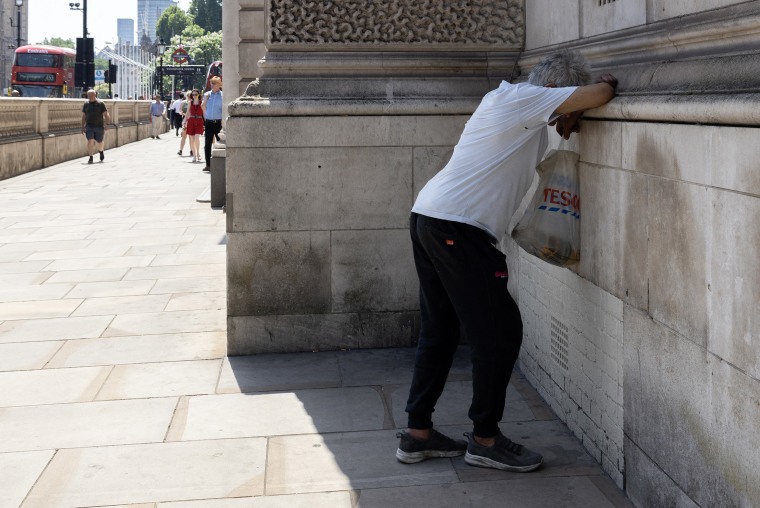
An individual rests from the sun in the shade of a building in central London during June. Source: Brook Mitchell / AFP via Getty Images
Copernicus reported that last month showed the highest average sea surface temperature ever recorded for July across oceans free of seasonal ice. This development is partially influenced by emerging El Niño conditions in the equatorial Pacific. The new average temperature record for July was 20.96°C (69.73°F), surpassing the 2023 record of 20.89°C (69.60°F). However, the average global surface air temperature last month was 16.90°C (62.42°F), classifying it as only the joint second warmest July on record, tied with July 2024.
In Western Europe, the average temperature record for June-July was 21.62°C (70.92°F), according to Copernicus.
“Persistent high-pressure systems trapped heat over Western Europe, amplifying extreme temperatures and widespread drought. As soils dry, they lose the capacity for natural cooling, which facilitates heat buildup,” explained Samantha Burgess, strategic lead for climate at the European Centre for Medium-Range Weather Forecasts. “This demonstrates how climate change is escalating heat extremes, with heat and drought increasingly reinforcing one another.”
Leave a Reply